Recently the ABPMJAY, which covers 10 million vulnerable families, reached a milestone of providing 100 million treatments. However, given the size of the scheme, ensuring cost-effectiveness within such a large scheme is highly dependent upon having detailed and robust information on economic costs within the health system. Here we discuss, the role of costing in priority setting, price negotiations and the measures that India is taking in this area, as part of its efforts to ensure equity and cost-effectiveness within its healthcare system.
Poor cost data can lead to the misallocation of resources
Priority setting is the process of making decisions about how best to allocate limited resources to improve population health. Priority setting within healthcare can be facilitated through health technology assessments (HTA) which includes quantifying whether investments in healthcare are both clinically effective and cost-effective and through exploring the key factors within the healthcare system that drive costs.
In India, as in many low- and middle-income countries (LMICs), there have been challenges in systematically incorporating explicit priority setting or HTA into healthcare decision-making in India. A key barrier has been the complex and fragmented healthcare system with several different insurance and “assurance” arrangements, at both the central and state level. Despite these challenges, the government of India has begun to take proactive steps towards institutionalising HTA. It has established its own HTA agency at the national level (HTAIn) in the Ministry of Health and Family Welfare, and HTAIn has been developing HTA standards and initiating the first health technology appraisals.
But, as HTA rolls out in India, the limited availability of cost data has been highlighted as a key concern by both government actors and the press. The availability of cost data is in turn constrained by limited cost data collection activities, the inadequacy of information systems to meet costing needs, and the lack of political interest in costing. A typical problem is when only some of the costs relevant to delivery of a drug or diagnostic tool are assessed (e.g. excluding patient monitoring or patient incurred costs). An intervention can then appear more or less cost-effective than they actually are and fail to acknowledge the cost burden placed on patients.
This is a problem found in many LMICs but with political will, a standardised, central, and freely available source of health service cost data can be developed to address this gap (such as in Thailand or Cambodia). As a result it will lead to a fall in the duplication of efforts and the expense of data collection to improve the quality of HTA.
Good quality cost information can help governments negotiate better prices
The terms “cost” and “price” are often, mistakenly used interchangeably. However, they are extremely different things. Specifically, prices do not necessarily reflect costs. Prices are the negotiated rate for a good e.g. drugs or service such as consultations. Set too high, prices can over-stretch a budget, limiting spending in other areas and setting up barriers to care and, where individuals pay for care, lead to catastrophic health expenditure. At the same time, high reimbursement rates can result in the over-use of certain treatments such as c-sections and have even led to unwanted hysterectomies. Set too low and the prices can contribute to over-use of some therapies such as antibiotics. Good quality cost information and HTA can help regulate prices so that they reflect value for money.
Regulating prices can be easier within health systems that have a central purchaser such as the UK, France, Australia and Thailand where prices are set in accordance with costs. Within these countries, uniform reimbursement rates are set using data on the cost of health service provision collected through the mandated submission of cost data from all providers or, in the case of Thailand, comprehensive cost surveys conducted by the Health Intervention and Technology Assessment Program of the Ministry of Public Health (HITAP).
Such a system which involves a central regulator encourages transparency and can help contain growth in costs through both accountability as well as economies of scale. For example, using reliable cost information in an HTA process allowed the Thai government to negotiate an affordable price for the HPV vaccines, demonstrating how monopsony power (when there is only one buyer in a market) combined with good cost information can contain costs.
Regulating prices is trickier in fragmented healthcare systems (e.g. USA or India) which have many different types of providers and purchasers (insurers/government). In India, the fragmented system has resulted in large scale variations in prices for similar services across and between states and providers. The majority of fee rates within India’s many public health insurance schemes have been set using various processes and fee rates with different incentives for different services resulting in a process that is “non-transparent and often arbitrary and irrational.” These prices are likely to be inefficient and highly incentivise certain types of services at the expense of others, such as the use of high technology stent implants that have no evidence based benefit over cheaper models. Gathering information on coronary stent prices revealed price mark ups of between 4-6 times the cost price, leading government price capping and up to 85 percent price reductions. Similarly, a recent Indian initiative to improve TB testing in the private sector has shown how standardisation of prices can be achieved by bringing private laboratories together under a single regulatory body, India has reduced the cost of accredited TB tests to affordable levels. The issue has been highlighted during the COVID-19 pandemic with private hospitals accused of charging exorbitant prices, making the government mandate hospitals to share COVID-19 fee details and some evidence of drops in non COVID related healthcare utilisation due to financial barriers.
As publicly funded health insurance schemes expand to cover a greater portion of the population and consume a greater portion of the healthcare budget, the need for prices to be set at efficient levels is more pressing. The demand for freely available good quality cost information to inform price-setting therefore becomes increasingly important.
India is beginning to build a cost evidence-base
Until now, costing information in India has largely been fragmented, not available across states or levels of the health system and highly disease specific. In fact, the major source of cost data has been individual cost studies which have been mixed in validity and reliability. This has been further compounded by the fact that there is a limited pool of health system experts with costing experience in India.
In recognition of the lack of costing capacity within India, the Department of Health Research (DHR) along with academic experts like PGIMER Department of Community Medicine and School of Public Health have taken a proactive approach to strengthen the costing capacity of the health system. Alongside the establishment of a technical working group on costing, there has been support for the development of training material for economic evaluation more generally and subsequently in specific topics including costing. These take the form of online modules, workshops for policy-makers and practitioners and a forthcoming costing manual which lays out principles and standards for costing health services in India.
To improve the availability of data, a National Health System Cost Database website is being built as a public good, by PGIMER Chandigarh, with the support of the International Decision Support Initiative (iDSI). This database currently includes data on the unit costs of health services from 167 public health facilities (district and below) located in 6 different states across India, collected in collaboration with PGIMER’s partners IIT Madras, PHFI Delhi, TISS Mumbai.
In addition to the development of the database and website, the HTAIn has launched a national cost study-Costing of Health Systems (CHSI)-to collect further cost information from public and private healthcare tertiary and district level providers located across 11 different Indian states. The data will be used for HTA and has been used to estimate the unit costs of the AB-PMJAY health benefit packages (HBP). The National Health System Cost Database website continues to be updated with new data (such as the CHSI results) as these become available, as well as the latest methodological standards and guides.
The database website also hosts a user friendly and unique unit cost predictor (based on a statistical cost function). The predictor allows users to generate state specific average outpatient visit and inpatient admission costs for use in their own analyses. For example, a researcher wanting to do an HTA specific to the state of Andhra Pradesh would be able to extract a mean cost for their locality rather than use a national level average.
These first incremental steps towards generating nationally representative health service cost data for India are already proving their value. Since the launch of these two initiatives, the CHSI study costs results have been used to inform reimbursement rates for AB-PMJAY as well as for as well as for the costing of PMJAY COVID-19 HBPs.
What next?
India has initiated a welcome and multi-faceted approach for increasing costing capacity, improving cost data and generating a robust evidence base for HTA. These initiatives are already facilitating priority setting and a more transparent price setting process. But there is still work to be done. The role of costing in decision-making needs to be higher up in the healthcare policy makers’ agenda and become an integral part of the evidence base. Healthcare providers and academic centres can facilitate this by adapting information systems to meet cost data collection needs. More critical, is the need for greater transparency around fees and charges. In the future, Ministry of Health; State Departments of Health; National and State public health insurance agencies can make publication and/or submission of provider healthcare costs or fees a mandatory requirement for all providers and in particular publicly funded healthcare. These incremental but exceedingly important steps will help create more transparent healthcare decision-making in the country.
Authors: Lorna Guinness, Hiral Anil Shah, Abha Mehndiratta and Shankar Prinja
Thank you to Kalipso Chalkidou for valuable oversight.
]]>By Abha Mehndiratta, Kalipso Chalkidou, Saudamini Dabak, 5th May 2020
Health Technology Assessment (HTA) is a policy tool to support rational priority-setting. In India, it allows decision-makers to make informed comparisons to ensure cost-effective, high-quality health services and interventions are supplied or purchased by the Ministry and State Departments of Health and Family Welfare. As India moves towards the achievement of Universal Health Coverage (UHC) with the Ayushman Bharat Scheme, HTA is critical for choosing services/interventions which provide value for money. This is applicable for both the health benefits package of the Pradhan Mantri Jan Aarogya Yojana (PMJAY) health insurance scheme and primary care services provided by the Health and Wellness Centres. It can also help improve quality control of the growing private healthcare sector in India by improving return-on-investment of public-private partnerships with better quality and appropriate care.
The International Decision Support Initiative (iDSI) was invited by the Bill & Melinda Gates Foundation (BMGF) India Country Office to share its experience of supporting institutionalisation of HTA in India with other BMGF partners. During the webinar iDSI partners from the Center for Global Development (CGD), Health Intervention and Technology Assessment Program (HITAP) – Thai Ministry of Public Health, Imperial College London and the Post-Graduate Institute of Medical Education and Research (PGIMER), Chandigarh shared their work within India on the healthcare priority setting agenda. Links to the recorded video and slides from the webinar are available and a brief overview of the session is provided below:
iDSI is a global network of priority setting institutions that has been collaborating with partners in low-and-middle income countries (LMICs) to build capacity for HTA. Since 2013, iDSI has partnered with countries such as Indonesia and China on institutional strengthening, data and analytics, development of global public goods on methods and tools, and smart purchasing.
The Individual, Node, Network and Enabling Environment (INNE) framework was used as a systematic approach to share iDSI’s capacity building activities with stakeholders at various levels for institutionalisation of HTA in India to accelerate sustainable UHC.
- Individual: Increased technical capacity of users and producers of HTA via training workshops, higher education programs and technical support on HTA studies.
- Node: Strengthened institutional frameworks by supporting the Department of Health Research (DHR) in establishing HTAIn (Health Technology Assessment in India) infrastructure. For example, by sharing relevant documents on HTA process and methods, country experiences etc.
- Network: Facilitated and encouraged participation of partners from India who routinely undertake HTA studies at relevant HTA network meetings like HTAsiaLink Conference, the Prince Mahidol Award Conference (PMAC) etc.
- Enabling Environment: Catalyzed increased political commitment and buy-in for evidence informed priority setting through high-level engagements and awareness raising events.
Examples of applications of HTA in India were shared such as (i) HTA on anti-viral drugs for Hepatitis C that led to its inclusion in Punjab Government’s health benefits package and also caused change in standard treatment guideline for Hepatitis C management (ii) HTA on safety-engineered syringes leveraged by the Government for price negotiation and procurement. The government of Andhra Pradesh to decide on this topic subsequently cited this study.
HTA related knowledge products from India were briefly discussed during the webinar. This included the HTA methods manual; budget impact modelling guidelines; health related quality of life value set (EQ5D5L) for India, Cost of Health Services in India (CHSI) study and the National Cost Database for India. The National Cost Database is a central resource for users and producers of cost data and currently includes data from 200 public facilities in 6 states. Analytic work using the National Cost Database is being continued to develop a unit cost predictor to estimate unit costs of healthcare service delivery in India.
IDSI’s work with partners has laid the groundwork for the future by increasing capacity of users and producers of HTA. It has supported in country efforts in building an infrastructure for evidence-informed policymaking, developing a range of knowledge products and strengthening networks with partners in other countries. In addition, based on current trends, the importance of prioritising healthcare resources will become all the more acute as India emerges from the COVID-19 crisis. In the post-COVID-19 era it is unlikely to be business as usual. India will need to balance pre-COVID-19 UHC commitments with clearing up backlog of elective procedures and resuming vaccination and screening campaigns during what is forecast to be the deepest recession since 1979. Demonstrating value for money through systematic processes will therefore be a policy priority and ought to be seen itself as a Best Buy for healthcare systems.
]]>On Friday 4th October 2019, members of the International Decision Support initiative (iDSI) were invited to the Ministerial Inauguration meeting of Ghana’s first National Health Technology Assessment (HTA) steering and technical committees for HTA. The invitation acknowledged iDSI’s 11 years of active involvement in the country advocating for prioritising evidence-informed decision making in Ghana
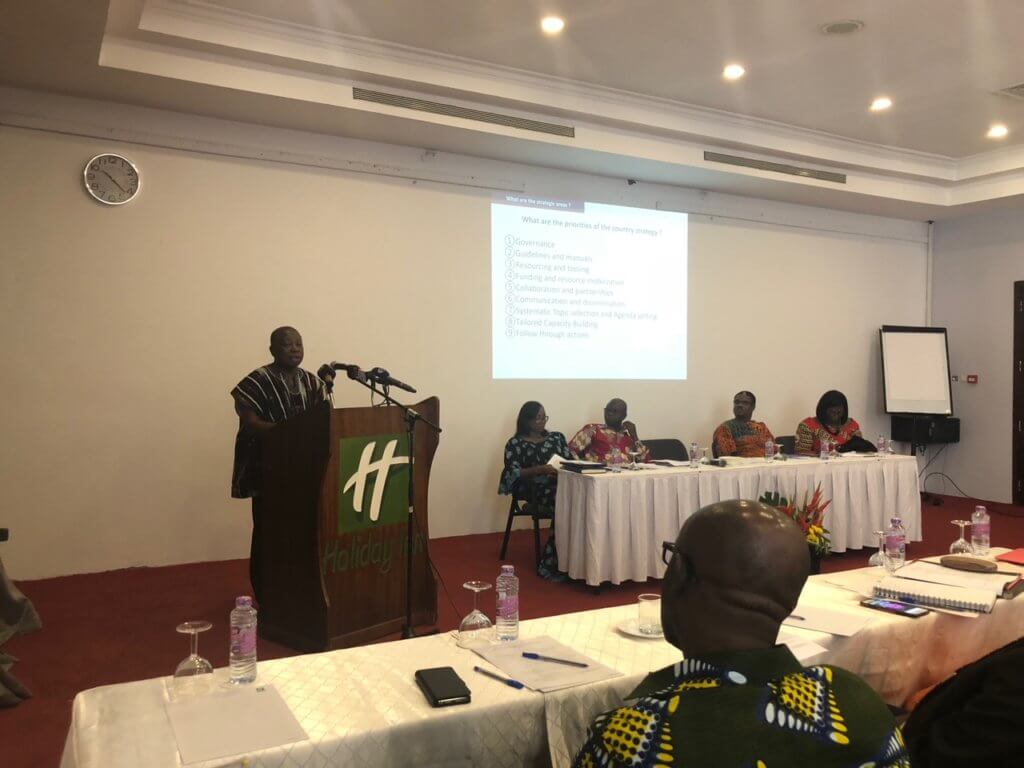
The honourable Kwaku Agemang-Manu, Minister of Health in Ghana started the event with an announcement of the launch of a steering and technical committee to institutionalise HTA in Ghana.
This new National Steering Committee, with representatives from the public and private sectors, as well as development partners, aims to set the HTA agenda. The National Steering Committee will also oversee HTA activities in the country, and provide advice on governance and structuring process and methods for assessments and decision making to ensure the nationwide HTA function is sustainable.
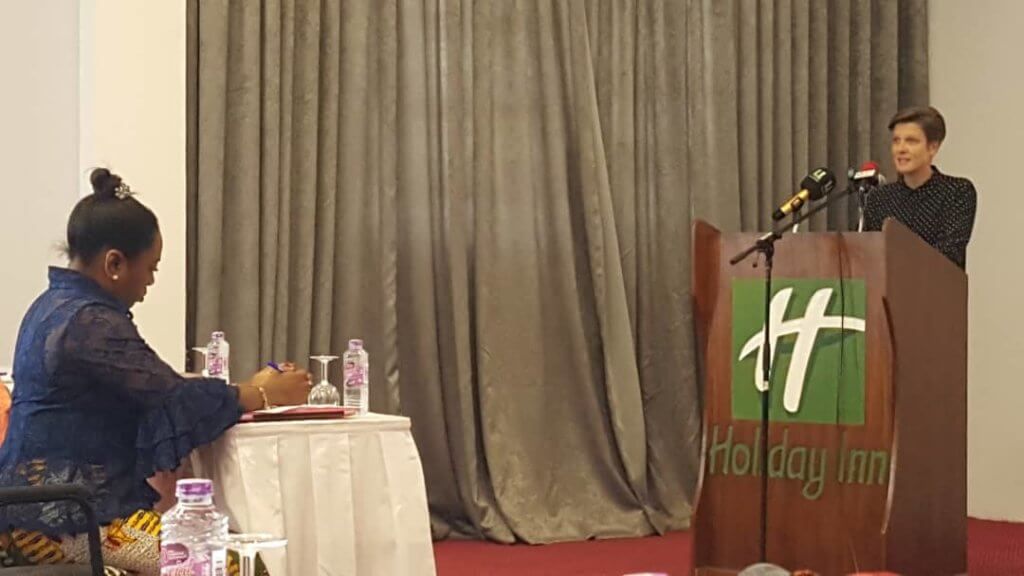
This step comes as the Ministry of Health reinforces its commitment to attaining Universal Health Coverage (UHC) through effective resources allocation within the Ghanaian healthcare system. According to the Ministry of Health, the technical committee will play a technical supporting role for evidence generation and supporting the steering committee in preparation of the tools needed to support and operationalise HTA activities as envisioned by the main stakeholders in the country. Both committees are expected to be coordinated and run by a Ministerial Secretariat, which was assembled and trained since 2016, and continues to receive extensive support from the iDSI network
Leading directors from the Ministry of Health, including Ms Martha Gyansa-Lutterodt, Director–Technical Coordination Unit and iDSI advisory board member, Ms Joycelyn Azeez, Director–Pharmacy Unit and Mr Hamidu Adakurugu, Director of Administration attended the meeting. In addition, other national executives, such as Lydia Dsane- Selby, Chief Executive Officer–National Health Insurance Authority, attended the event. They have been working closely with our network on technical assistance projects, most recent of which was an HTA study on hypertension in Ghana, which informed price negotiations and the 2017 update on standard treatment for hypertension.

As a global network of health, policy and economic experts, supporting countries to achieve UHC and Sustainable Development Goal 3 (SDG 3), iDSI has been fully committed to supporting the development of tailored institutional capacity for HTA in Ghana across all government, academia, and private entities. We have been working to foster collaboration nationally and internationally, emphasising country ownership and local mandate, so countries can lead their own progress towards UHC with support from international partners.
Ghana has achieved critical milestones for developing HTA capacity through recent achievements with iDSI support and ministerial leadership, such as:
- Ghana’s first national economic evaluation on hypertension management. This work informed price negotiation, procurement, and changes to the standard treatment guidelines.
- Practical learning and knowledge mobilisation, using the hypertension project as a case study to raise awareness and build practical experiences around conduction economic evaluations for HTA in Ghana.
- Ghanaian stakeholders attending bespoke iDSI trainings that address differential needs across various Ghanaian stakeholders aimed to develop the necessary capacities in-country.
- Developing a country strategy for HTA institutionalisation and laying foundations for assembling HTA committees by sharing global experiences of process and methods deployed for similar activities internationally.
To formalise our relationship and commitment, iDSI are in the process of signing a Memorandum of Understanding (MOU) between the Ministry of Health, the University of Ghana and Kwame Nkrumah University of Science and Technology (KNUST). This will be instrumental in harmonizing all national and international efforts.
We are eager to continue our longstanding collaboration in Ghana to help the county realise its vision for HTA institutionalisation. Our cross-country team, made up of members of the Ministry of Health secretariat, are expected to fully carry out the operations of the announced committee, will be meeting this week in Oslo, Norway to discuss the outcomes of this inauguration meeting and organise a plan of action for iDSI activities going forward.
Within the next few years, Ghana can be an African leader in HTA institutionalisation, which will in turn help expand activities beyond Ghana, situating the country as a regional hub to mobilise knowledge and capacities in other African countries. Ghana is already a leading member state in the West African Health Organisation (WAHO) and can play a leading role to strengthen south-south collaboration, drawing on its rich experience in the field of HTA. A great example to follow is the achievement of Health Intervention and Technology Assessment Program (HITAP) in Thailand, which emerged as a major regional hub extending support to Asian and African countries’ efforts, to achieve HTA institutionalisation.
As the Minister of Health accurately described, Ghana has positioned itself to institutionalise HTA. However, the main bulk of work is still yet to come, and as we look forward to our next phase of work in Ghana, we call on all involved parties to engage with each other and keep effective communication strategy. We also invite the Ghanaian government to continue leading the way by mobilising essential domestic resources to self-sustain and steer future developments in this new dynamic age of healthcare in Ghana.
Congratulations to all involved in this important development.
]]>The 2019 study tour represented another successful collaboration between core iDSI partners to support knowledge strengthening among key policy makers in China through interaction with representatives from UK government agencies, NHS, academic and private sector colleagues involved in healthcare.
The Chinese participants included seven representatives from the National Health Commission, including representation from the Department of Drug Policy and Essential Medicines Systems, and the Department of Healthcare Reform; a representative from the Department of Social Security, Ministry of Finance; and representatives from provincial health authorities, including the health commissions of Liaoning, Jiangsu and Henan. Researchers and policy advisers from CNHDRC and the Shanghai Health and Development Research Center also joined, in addition to colleagues from the academic sector in China, the latter including representation from Peking University, the Beijing Normal University, and the China Pharmaceutical University. Full details of all the participants can be found listed in the agenda.
As in previous years, all 27 delegates received a detailed introduction into the structure and financing of the NHS, including the role of HTA in supporting resource allocation decisions in the UK. In addition, there was a special focus on primary care, led by the Imperial College WHO Collaborating Centre for Public Health Education and Training, and an afternoon workshop hosted by the Centre for Health Economics at the University of York, which explored specific issues relating to the application of economic techniques to inform discussions on evaluating health system performance and efficiency.
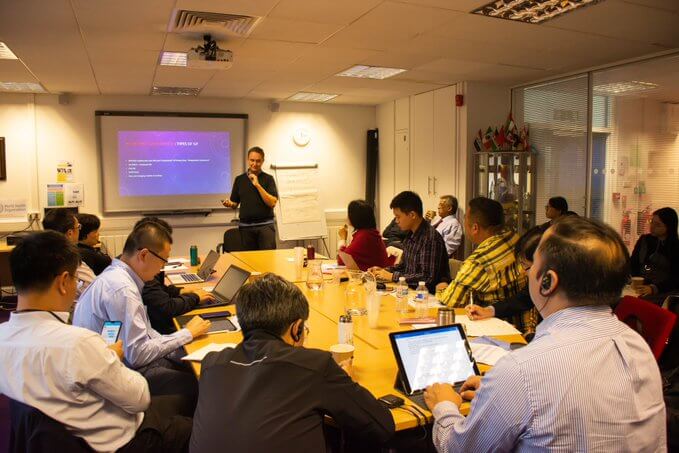
For this year’s tour, we also placed a special emphasis on the UK’s approach to cancer care, specifically in relation to the process adopted by the National Institute for Health and Care Excellence (NICE) when evaluating new oncology products. We also explored the importance of considering the value that new innovations could bring within the context of delivering appropriate and timely pathways of care, including radiology, pathology, surgery, and radiotherapy. The UK’s experience in these issues can potentially provide useful insights for the Chinese setting, given that cancer has become a leading cause of mortality in the country. This is being driven by an ageing population and the prevalence of lifestyle factors such as smoking, with lung, stomach and breast being among the most common cancers. Policy makers in China have recognised the need to strengthen systems for assessing the clinical benefit of new cancer medicines, and this will be the focus of planned further collaboration between the Global Health and Development Group at Imperial and CNHDRC.
We would like to thank everyone who attended and contributed to the two-week study tour, with a special thanks to the British Embassy in Beijing, and Professor Kun Zhao and her team at the CNHDRC.
]]>The Health Technology Assessment programme (HTAIn) which is funded by the Government of India, is now fully operational. Coordinated by a dedicated Secretariat based at the DHR, the HTAIn also works with ten designated Indian technical partners who produce Health Technology Assessment (HTA) studies on topics of national importance. iDSI has provided key technical assistance to the HTAIn Secretariat to train their technical partners on all steps required to conduct an HTA study. In the past 6 months over ten HTA reports have been finalised and approved by the Technology Appraisal Committee (TAC). Among them, the results of the HTA study on Intra Ocular Lens for cataract Surgery and safe syringes informed the definition and costing of the Health Benefits Package for the Pradhan Mantri Jan Arogya Yojana (PM_JAY )in India, the largest nationally funded public healthcare scheme in the world. States across India are increasingly looking to HTAIn for evidence-based advice on how to incorporate health technologies into the health system.
A recent and exciting development is that HTAin has launched its dedicated website: Among other things, the website features information on HTAIn structure including theTAC and its HTA methods process. The website also features HTAIn current activities and the HTA reports prepared by HTAInTechnical partners. The HTAIn website also links with major national initiatives, including the Post Graduate Institute of Medical Education & Research (PGIMER) PGIMER Costing database, a tool for health policy makers and analysts that provides unique information on the unit costs of health services in India.
With these new tools, a host of different stakeholders at both central and state level in India have access to valuable resources that will help them make evidence-based priority decisions on health technologies in India. They also ensure transparency in the way HTAIn operates, working to international standards. As the PM_JAY evolves HTAIn will play an increasingly important role in helping the Government of India make considered decisions on the distribution of health budget resources, as well as timely uptake of good value technologies and in advancing Universal Health Coverage (UHC) for its population.
]]>As countries move towards Universal Health Care coverage and transition from development assistance for health, there is an even more acute need to establish robust processes for assessing and integrating new cost-effective health technologies: a key pillar of financially sustainable, and transparent health systems.
A key strategy to support enhancing VfM is through the incorporation of context specific and economically informed evidence into all levels of health decision-making.
Last month iDSI was in Geneva running an introductory course for Unitaid and the Global Fund on economic approaches used in public health, with specific reference to HIV, TB and Malaria. The two day course covered:
1. Existing approaches to VfM at the Global Fund and Unitaid
2. The theory behind why priority setting in health is important, methods behind conducting economic analysis and practical applications of priority setting in countries
3. How countries are introducing and developing Health Technology Assessment (HTA) processes on the path to Universal Health Coverage
The course was facilitated by Francis Ruiz and Alex Winch (Imperial College London) along with Professor Alec Morton (University of Strathclyde). The training was organised by Ross Leach from Unitaid and Shufang Zhang from the Global Fund.
Attendees from the Unitaid strategy, results and finance teams joined staff from the Global Fund’s Technical Advice & Partnerships, Health Product Management and Grant Management divisions.
Ongoing iDSI projects in the Philippines and Kenya were referenced, along with practical examples of integrating the STAR (Socio-Technical Allocation of Resources) tool in countries; and a deep dive on how VfM is considered in published literature around Malaria, HIV and Hepatitis C.
At the national level, countries are increasingly developing formalised HTA processes to support evidence-based trade-offs in health, across a range of diseases and for the adoption of innovative health technologies.
At the international level, countries are looking to the development community more and more for guidance and support on incorporating HTA, as expressed in World Health Assembly resolution 67.23 on HTA. iDSI hopes to harness more opportunities to further engage with multi-lateral financing organisations such as the Global Fund, Unitaid and normative technical agencies such as the World Health Organization on the robust use of economic evidence in resource allocation and decision making.
]]>The burden of NCDs remains high in low and middle-income countries (LMICs). Reducing this burden is at the forefront of the global health agenda, but how do countries go about doing this?
HITAP and partners from expert institutions have been commissioned by the Prince Mahidol Award Conference (PMAC); Institute for Population and Social Research; and Mahidol University to develop a book that draws on examples of cost-effective interventions for NCDs, dubbed ‘best buys’; cost-ineffective interventions for NCDs (‘wasted buys’) and controversies that can often proliferate both. We are delighted to have this work supported by the Thai Health Promotion Foundation and iDSI and hope the end product will capture what good investments have been for NCD prevention, whilst at the same time detailing obstacles policy makers must navigate, such as public opinion; commercial and trade interest; and unique health system challenges.
The project team are looking forward to launching the book as an ‘evidence package’ that will draw upon examples where lessons can be learned; and provide readers with the tools to review the evidence available.
Chapter authors and co-investigators met at the Center for Global Development Europe in London last month to review preliminary findings and decide on next steps for the project. One of the key points raised was the unavoidable, harsh reality that there is not just a dichotomy between ‘best buys’ and ‘wasted buys’. What may be a best buy in one setting can be wasted in another; and evidence on effectiveness can be weak or absent altogether in certain settings. Authors agreed that addressing uncertainties needs to be at the core of this project.
As well as raising local contextual questions, the project team agree the books content needs to highlight the monitoring and evaluation of interventions once implemented – effectiveness is not static and a ‘best buy’ can soon become a ‘wasted buy’.
Public health specialist and policy advocator Dr Suwit Wibulpolprasert, from Thailand’s Ministry of Public Health, said: “This is a dynamic research project that should not limit itself to a book but rather a continuous evidence-based social movement.”
We still have a year to go until the launch of the evidence package on UHC Day 2019 (12 December), in the meantime the project team can be found presenting preliminary findings at PMAC 2019. We will be at the PS2.5 session on Saturday 2 February 2019, 10.30am-12.30pm. Hope to see you there!
]]>The grant, which will cover five years, represents a significant uplift to the funding granted to iDSI in 2015 and will allow us to continue working relationships with policymakers and healthcare payers to understand and respond to the challenges they face – whether ensuring the financial sustainability of a health insurance fund or fair access to good quality care across public health facilities.
This next phase of iDSI will see stronger emphasis on Sub-Saharan Africa with iDSI’s flagship countries including Kenya and Ghana, where global health funders will be departing and domestic health care spending is on the rise. Additionally, many Sub-Saharan African countries are currently introducing national health insurance or coverage plans and making important decisions about what health services and technologies should be included in Universal Health Coverage (UHC) offerings, where value for money considerations could make a huge difference in health outcomes.
As a result of the renewed funding, iDSI’s global network of expertise is expanding – we’re pleased to report iDSI core partners now include: the Asia Health Technology Assessment consortium which includes the National Health Foundation of Thailand, the Saw Swee Hock School of Public Health, National University of Singapore and Health Intervention and Technology Assessment Program; the Health Economics Research Unit of the KEMRI Wellcome Trust Programme, the Norwegian Institute of Public Health and the Clinton Health Access Initiative, Inc.,in addition to current core partners: the Global Health and Development Group at Imperial College London, the China National Health Development Research Center and the Center for Global Development.
The network endeavours to generate long-term, locally-owned solutions to health care challenges through building capacities for using evidence in policy and clinical decisions. Its impact to date includes influencing policy in eight countries – China, India, Indonesia, Philippines, Vietnam, South Africa, Tanzania, and Ghana – where there has been tangible progress toward national institutions being established to embed value-for-money into decision-making about what medicines, vaccines or other health services should be offered to the population, and how these could be procured in the most cost-effective way. Already iDSI has supported Tanzania to prioritise its Essential Medicines List from 500 to 400 drugs, reducing spending on poor value items and freeing up resources to improve access to the most cost-effective medicines, trained Kenya’s Health Benefits Package Committee on measuring the added value of a new health intervention compared to existing ones, piloted a local quality improvement initiative with hospital staff in Vietnam to reduce inappropriate antibiotic prescribing for pneumonia and brought together more than 100 policy makers, academics and industry representatives working across Sub-Saharan Africa for a special event to share knowledge and best practices.
iDSI Director Kalipso Chalkidou, a Professor of Global Health Practice at Imperial College London who also directs the Global Health program at the Center for Global Development, said: “With government and aid budgets under pressure, many developing countries are facing declines in health funding and are going to have to make difficult choices. Policymakers’ decisions about what health care to make available and at what cost can be a life or death decision for people across the developing world. We will inform these critical decisions with data and evidence that maps out how best to spend limited funds to improve outcomes and save lives.”
Chinese, Thai, Norwegian, and British governments have backed iDSI, which also receives funding from the Department for International Development, the UK government department responsible for administering overseas aid.
Amanda Glassman, Chief Operating Officer at the Center for Global Development, said: “Previous health care decision making in developing countries has too often been driven by inertia and lobbying rather than science, economics, ethics and the public interest. We want to change that.”
Ira C. Magaziner, Chief Executive Officer of the Clinton Health Access Initiative Inc (CHAI), said: “Low- and middle-income countries are set to make great strides toward universal health coverage in the coming years, ensuring that all people have access to affordable and quality care. CHAI works with governments that are implementing health financing and service delivery reforms to meet this goal. We are excited to deepen our collaboration with the iDSI network to help partner governments set health care priorities, drawing on iDSI’s expertise and years of experience across different country settings.”
Trygve Ottersen, Executive Director at the Norwegian Institute of Public Health, said: “Without proper support, it is hard for decision-makers to navigate within the broad and ambitious agenda of the Sustainable Development Goals and to make evidence-informed choices that are both fair and efficient. iDSI serves as a unique platform for supporting the most critical choices on the path to UHC and the Institute is delighted to be part of this partnership.”
Professor Teo Yik Ying, Dean of the Saw Swee Hock School of Public Health at the National University of Singapore, said: “The Saw Swee Hock School of Public Health at the National University of Singapore is delighted to be a contributing partner to iDSI. The mission of iDSI to support evidence-based decision making in global public health is aligned to the mission of the School, with the aim of translating research discoveries to improve the health of global communities.”
Dr Somsak Chunharas, from the National Health Foundation of Thailand, said: “Being an organisation promoting evidence-based policy and system development in Thailand for the last 30 years, the National Health Foundation looks forward to this opportunity to share and learn from various countries’ context in establishing the mechanism and tools for evidence-informed policy.”
iDSI was borne out of the recommendations of the Center for Global Development’s Priority-Setting Institutions for Global Health Working Group in 2012.
]]>
The Health Technology Assessment Toolkit was published in September 2018 following consultation with staff working in health policy around the world who helped develop the content. The end result is a tool detailing the building blocks of a sustainable and locally relevant Health Technology Assessment mechanism for priority-setting. Since its launch, the Health Technology Assessment Toolkit has had over 110 downloads.
iDSI would like to thank reviewers working in ministries of health, health insurers and other health agencies based in: Bhutan, Brunei, China, India, Malaysia, Philippines, Spain, Vietnam, the USA and the UK for their efforts to make the HTA Toolkit a success.
The Health Technology Assessment Toolkit and all other iDSI research and technical outputs can be viewed on the open science publication platform F1000Research. The iDSI Gateway features work developed through iDSI’s core themes: tackling healthcare challenges; strengthening health systems and institutions; generating and using evidence; smart purchasing for Universal Health Coverage; value for money for sustainable development; and measuring impact
All articles on the iDSI Gateway are published in line with F1000Research’s immediate and transparent publication model, regardless of the article size, type, or perceived impact.
Want to know more about how iDSI works to maximise the value of funds and coverage of quality healthcare? Follow a typical iDSI journey which encourages local ownership and capacity towards ensuring policies are evidence informed and fair.
Already applied iDSI’s Health Technology Assessment Toolkit to your work? Send in your experiences, iDSI would be very glad to hear from you. Contact Madeleine Stewart, iDSI Communications Manager, [email protected].
]]>
As part of three recent events, which saw hundreds working in health policy gather in Accra, Liverpool and London, iDSI sought to delve into important factors that guide the design of Essential Medicines Lists and Health Benefit Packages that can evidentially identify the potential value of different interventions.
The events allowed for an increased understanding of the value of Health Technology Assessment (HTA) and how it underpins strategic purchasing of health services for achieving UHC; and shone a light on ‘demonstration’ countries such as China and Ghana which are making large strides towards ensuring HTA is at the forefront of their policy agenda. Events on this scale are a result of the culmination of many years of engagement; and new partnerships that have enabled iDSI access to new LMIC partners, allowing for regional and global networking and knowledge sharing.
Setting Priorities Fairly: Sustainable Policies for Effective Resource Allocation saw almost 100 policy representatives from across Africa and Europe gathered in Accra, Ghana for a special event in September 2018 that focused on sustainable resource allocation policies for LMICs, co-hosted by iDSI and Health Technology Assessment International (HTAi). The event marks an important milestone in iDSI’s collaboration with Ghana which began in 2008 (via the Global Health and Development Group at Imperial College, formerly NICE International), as well as the nation’s commitment to realising a “Ghana beyond aid” as its booming economy puts it on course to transition from external development aid.
The two-day event, opened by Ghana’s Deputy Minister for Health Mr Kingsley Aboagye-Gyedu, set out to address the difficulties LMICs face with attaining UHC; and how to navigate inconsistent and dwindling healthcare funding. HTA was a key focus, with presentations including global experiences of HTA from eminent researchers, health economists and clinicians from the University of Ghana, Ghana’s National Health Insurance Authority, The Global Fund to Fight AIDS, Tuberculosis and Malaria, World Health Organization, HTAi, iDSI and more.
During his keynote speech Mr Aboagye-Gyedu described how Ghana had incorporated HTA recommendations in its Standard Treatment Guidelines and Essential Medicines List because of its usefulness as tool to assuring value-for-money – from the design and management of benefit packages to the determination of reimbursement list of medicines. This follows a View our iDSI timeline to read more about Ghana’s journey towards UHC to date.
iDSI‘s newly released Health Technology Assessment Toolkit was launched at the event, with each delegate receiving the resource on a USB stick. The HTA Toolkit is a free, accessible resource for technical staff working in health policy keen to build HTA processes in their own countries and was developed in consultation with staff working in health policy around the world.
In October 2018 iDSI co-hosted a satellite session on the opening day of the Fifth Global Symposium on Health Systems Research in Liverpool, with Sida and CHAI, on Health financing towards UHC. Through the collaboration, the session brought together officials from Kenya, Zambia, Indonesia, Malawi – as well Eswatini and Rwanda, with whom iDSI had not previously engaged – representing ministries of health, national health insurers, a Prime Minister’s cabinet and academia. The panellists shared practical experiences from health financing reforms in their countries, with a focus on priority-setting and strategic purchasing. The overarching theme of the symposium was Health Systems for all in the Sustainable Development Goals era and it commemorated anniversaries of two significant global health events – the Alma Ata declaration and the 70 years of the UK National Health Service (NHS).
The same week saw iDSI welcome 22 delegates from China, from both clinical and non-clinical backgrounds, representing various departments within the Chinese Ministry of Health (National Health Commission); the China National Health and Development Research Center (Beijing and Shanghai); local policy makers from three provinces; and academics from Huazong, Beijing and Shanghai universities, to develop their understanding of the UK healthcare system, including health-related legislation and regulatory mechanisms, policy development and health reforms. The momentum behind HTA in China has in part been facilitated by longstanding relationships between the Global Health and Development Group and the enthusiasm of Chinese policy makers following UK study tours to learn about the NHS approach to setting priorities fairly.
The visit preceded the National HTA Congress in Beijing on 25 October 2018 which saw the formal launch of the National Center for Integrated Assessment of Pharmaceuticals and Health Technologies in China, and where iDSI support was noted at the opening event. One of the first major tasks of the national HTA Center will be to update the National Essential Drugs List taking into consideration cost-effectiveness criteria. The HTA Center’s work will be carried out by iDSI core partner the China National Health Development Research Center, a national think-tank set up in 2008 that provides evidence-based technical advice to national and provincial health policy-makers.
iDSI Director Professor Kalipso Chalkidou has said China “can lead the way” with regards to using HTA as a policy tool to contain spending and drive more equitable care. This follows Professor Chalkidou’s attendance to the National HTA Congress, detailed also in an View our iDSI timeline to read more about the evolution of HTA in China.
The annual study tours, which started in 2014 (under NICE International) have involved talks from expert representatives from the Department of Health, the Medicine and the Healthcare Products Regulatory Agency, Public Health England, National Institute for Health and Care Excellence, the UK Health Forum and the London School of Economics.
2017’s study tour was timed so key individuals from the National Health and Family Planning Commission (replaced by the National Health Commission in 2018), CNHDRC and GHD could participate in the 5th UK-China People-to-People Health dialogue, attended by UK Secretary of State Jeremy Hunt; NHFPC Vice Minister Cui Li; and the Parliamentary Under Secretary of State for Public Health and Primary Care Steve Brine and Margaret Chan, former Director-General of the World Health Organization.
We have made slides available from:
Setting Priorities Fairly: Sustainable Policies for Effective Resource Allocation
Health financing towards UHC HSR 2018 satellite session
What’s In What’s Out contains in-depth case studies of how LMICs have grappled with and guidance on designing Health Benefits Packages for UHC.
]]>